
Once a rental property qualifies for it, the DP3 is almost always the better dwelling form. Instead of only paying for a short list of named perils like a DP1, a DP3 covers your property against damage from anything except what's specifically excluded in the policy. That single difference in structure changes what you're protected against far more than most owners realize.
What Is a DP3 Insurance Policy?
Dwelling Property 3 is the broadest of the standard dwelling forms, written on an open-perils (also called "special form") basis. Rather than listing what's covered, the policy lists what's excluded, and everything else is presumed covered. That flips the burden: with a DP1, you need your cause of loss to be on the list; with a DP3, you need it to be missing from the exclusions.
DP3 policies are also typically written on a Replacement Cost basis for the dwelling itself, meaning a covered loss gets rebuilt or repaired without depreciation factored in, unlike a DP1's Actual Cash Value payout. Conexion works with specialty carriers who extend replacement-cost DP3 coverage even to older homes that would otherwise get pushed onto a DP1.
Perils Covered by DP3 Insurance
Because DP3 is open-perils, the "covered" side of the table below is really everything that isn't excluded. Here's how that plays out against the most common causes of loss landlords deal with:
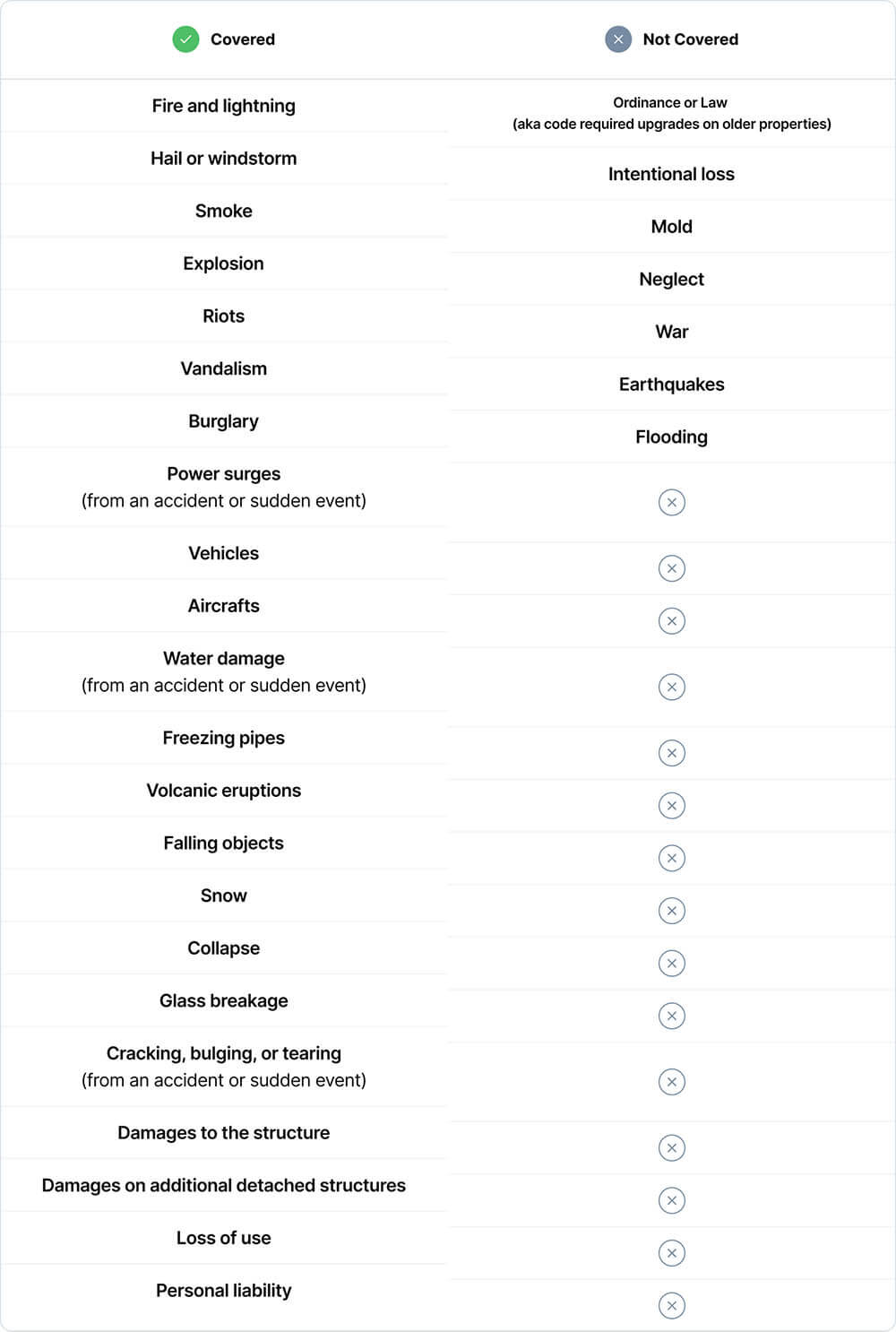
Notice the pattern in the exclusions: flooding, earthquakes, mold, and war are excluded on nearly every dwelling policy, not just DP3s. If a property carries flood or earthquake risk, that needs a separate policy layered on top, not a DP3 endorsement.
When Is a DP3 Policy Needed?
If a property qualifies, a DP3 is close to a default recommendation. It's the right call when you want real protection against the causes of loss you can't predict (not just the common ones), when the property is occupied by tenants year-round, and when replacement-cost coverage matters more to you than shaving a few dollars off the monthly premium. Multi-unit buildings and higher-value single-family rentals are especially well suited to DP3, since a partial named-peril policy leaves too much exposed relative to what's at stake.
We write DP3 coverage on older homes too.
Most carriers push older properties straight to a DP1. We have specialty markets that will write full replacement-cost DP3 coverage on older homes that qualify.
What It Doesn't Cover
DP3's open-perils structure is broad, but it isn't unlimited. Flooding, earthquakes, mold, intentional loss, neglect, war, and ordinance-or-law upgrades (the cost of bringing an older property up to current building code after a loss) all sit outside a standard DP3. Some of these, like ordinance-or-law coverage, can be added back for an extra premium; others, like flood, need a completely separate policy.
Other Dwelling Policies to Consider
If a property doesn't qualify for a DP3, it typically drops down to a DP2 (a broader named-peril form) or a DP1 (the most basic named-peril form, priced lower but covering far less). We cover that comparison in detail in our DP1 insurance guide.
Where to Find a DP3 Policy for Rental Property
Not every carrier extends DP3 replacement-cost terms to every property, especially older homes. Conexion shops landlord coverage across 50+ carriers, including specialty markets built specifically for properties that standard companies turn down. Send us the property details and we'll tell you what you actually qualify for.
Final Thoughts
A DP3 is the form we recommend by default whenever a property can qualify. Open-perils coverage plus replacement cost closes most of the gaps a landlord actually gets burned by, and the exclusions that remain (flood, earthquake, mold, and a handful of others) are ones we can talk through and layer additional coverage on top of if the property's risk profile calls for it.
FAQs
What does "open perils" mean on a DP3?
It means the dwelling is covered for any cause of loss except the ones specifically excluded in the policy, the opposite structure of a named-peril form like DP1, which only covers what's explicitly listed.
Does DP3 cover flooding or earthquakes?
No. Flooding and earthquakes are standard exclusions on nearly every dwelling policy, DP3 included. Both require a separate policy layered on top if the property carries that risk.
Is DP3 written on replacement cost?
Typically yes for the dwelling itself, meaning a covered loss is repaired or rebuilt without depreciation factored in, unlike a DP1's Actual Cash Value basis.
Can an older home qualify for DP3 coverage?
Sometimes, through specialty carriers that write DP3 replacement-cost coverage on older properties that standard companies would push to a DP1. It depends on the property's condition, age, and location.
Does DP3 cover loss of rental income?
Loss of use coverage is typically included when the property becomes uninhabitable from a covered peril, though the exact terms and limits vary by carrier.
Can I add coverage back for excluded perils like ordinance or law?
Some exclusions, like ordinance-or-law coverage, can be added back via endorsement for an additional premium. Others, like flood, require a fully separate policy.
Get Your Rental Property Quoted the Right Way
Whether your property fits a DP3, DP1, or something in between, we'll shop it across 50+ carriers and tell you which form actually makes sense.