
If you own a rental property, your policy isn't just "homeowners insurance." Landlord coverage for the dwelling itself gets written on one of a handful of standardized "dwelling forms," and the one you land on has a real effect on both your premium and what actually gets paid out after a loss. The most basic of these forms is the DP1: a named-peril policy that trades broad coverage for a lower price.
What Is a DP1 Insurance Policy?
DP1 stands for Dwelling Property 1, the most basic of the three standard dwelling forms (DP1, DP2, DP3). It's a named-peril policy, meaning the dwelling is only covered for damage caused by perils that are specifically listed in the policy. If a cause of loss isn't on that list, it isn't covered, full stop.
That trade-off is also what makes DP1 attractive. Because the insurer is only on the hook for a short, defined list of causes, DP1 policies are priced lower than broader forms, and they're often the only option carriers will offer on properties that don't qualify for anything more comprehensive, like older homes or vacant units.
DP1 policies are also almost always written on an Actual Cash Value (ACV) basis rather than replacement cost, meaning a payout factors in depreciation. A 20-year-old roof doesn't get replaced with a brand-new one at the insurer's expense; you get its depreciated value.
Perils Covered by DP1 Insurance
Coverage varies slightly by carrier, but a standard DP1 form typically insures the dwelling against these named perils:
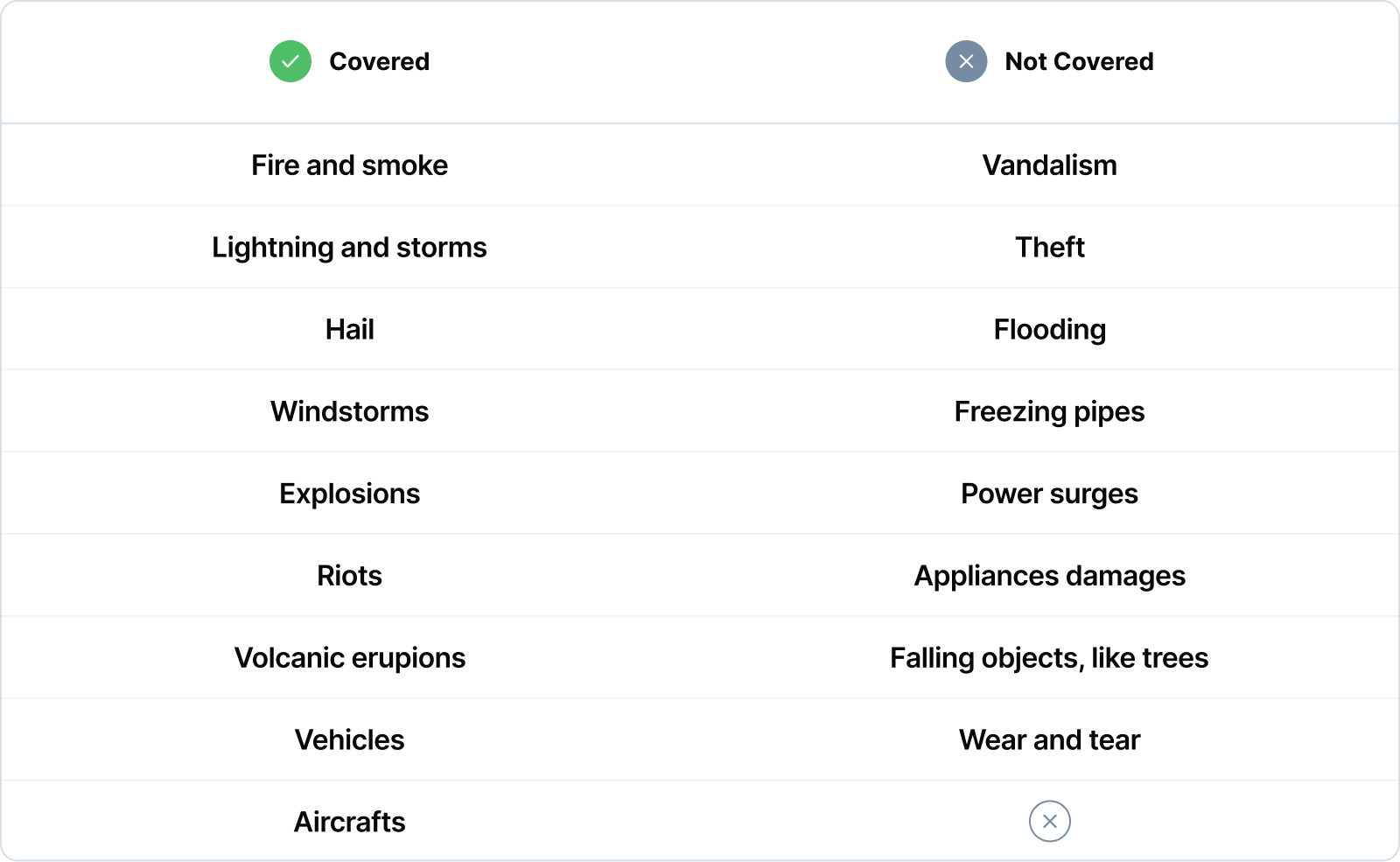
Vandalism is the one that trips people up. Some carriers include it on their DP1 form, many exclude it or only offer it as a paid add-on, and vacant properties (where vandalism risk runs highest) are exactly where that gap matters most. Always confirm vandalism coverage line by line before binding.
When Is a DP1 Policy Needed?
You Own a Property That's Currently Vacant
Most standard landlord policies restrict or exclude coverage once a property sits vacant for more than 30-60 days. A vacant dwelling is a different risk: no one's there to catch a small fire before it spreads, notice a break-in, or shut off water after a pipe bursts. DP1 forms, often paired with a vacancy endorsement, are frequently the only coverage available while a property is between tenants, under renovation, or held for resale.
You're on a Tight Budget
If cash flow is tight, a DP1's lower premium can be the difference between insuring the property and going bare. It's not the coverage we'd recommend by default, but a named-peril policy that protects against fire, wind, and the other big-ticket perils is a meaningfully better position than no coverage at all.
Not sure if DP1 or DP3 fits your property?
We shop 50+ carriers, including specialty markets that write DP3 replacement-cost coverage on older homes. Tell us about the property and we'll tell you what actually qualifies.
Other Dwelling Policies to Consider
DP1 sits at one end of a three-form spectrum. DP2 is a broader named-peril form that adds coverage for things like falling objects, weight of ice and snow, and accidental water discharge. DP3 flips the model entirely to open perils, covering everything except what's specifically excluded, and is usually the better fit whenever a property qualifies. We break down that comparison in detail in our DP3 insurance guide.
Where to Find a DP1 Policy
DP1 is a specialty form, and not every carrier writes it well. Conexion shops landlord and dwelling coverage across more than 50 carriers, including markets that specialize in older, vacant, or higher-risk properties that standard companies decline outright. Send us the property address and a few basic details and we'll come back with real options, not a guess.
Final Thoughts
A DP1 policy isn't a downgrade so much as it's a different tool for a different situation: older properties, vacant units, and tight budgets are exactly where a named-peril form earns its place. The key is knowing what's actually on the covered list before a loss happens, not after.
FAQs
Is a DP1 policy cheaper than a DP3?
Yes, generally. Because DP1 only covers a short list of named perils and pays on an Actual Cash Value basis, premiums are typically lower than a DP3's open-peril, often replacement-cost coverage.
Does DP1 cover vandalism?
It depends on the carrier. Some DP1 forms include vandalism, others exclude it or sell it as an add-on. This matters most for vacant properties, where vandalism risk is highest, so confirm it directly on your policy.
Can I get a DP1 policy on a vacant property?
Often, yes, sometimes paired with a vacancy endorsement. Many standard landlord policies restrict coverage once a property sits vacant, which is a common reason owners end up on a DP1 form in the first place.
Is DP1 written on replacement cost or actual cash value?
Almost always Actual Cash Value (ACV), meaning depreciation is factored into any claim payout rather than paying to replace an item brand new.
What's the difference between DP1 and DP2?
Both are named-peril forms, but DP2 covers a longer list, typically adding things like falling objects, weight of ice and snow, and accidental water discharge that DP1 leaves out.
Should I upgrade from DP1 to DP3 later?
If the property's age or condition improves enough to qualify, upgrading to a DP3 is usually worth exploring since it broadens coverage significantly, often for a manageable premium increase. We can re-shop this any time your situation changes.
Get Your Landlord Policy Quoted the Right Way
Whether your property fits a DP1, DP3, or something in between, we'll shop it across 50+ carriers and tell you which form actually makes sense.